

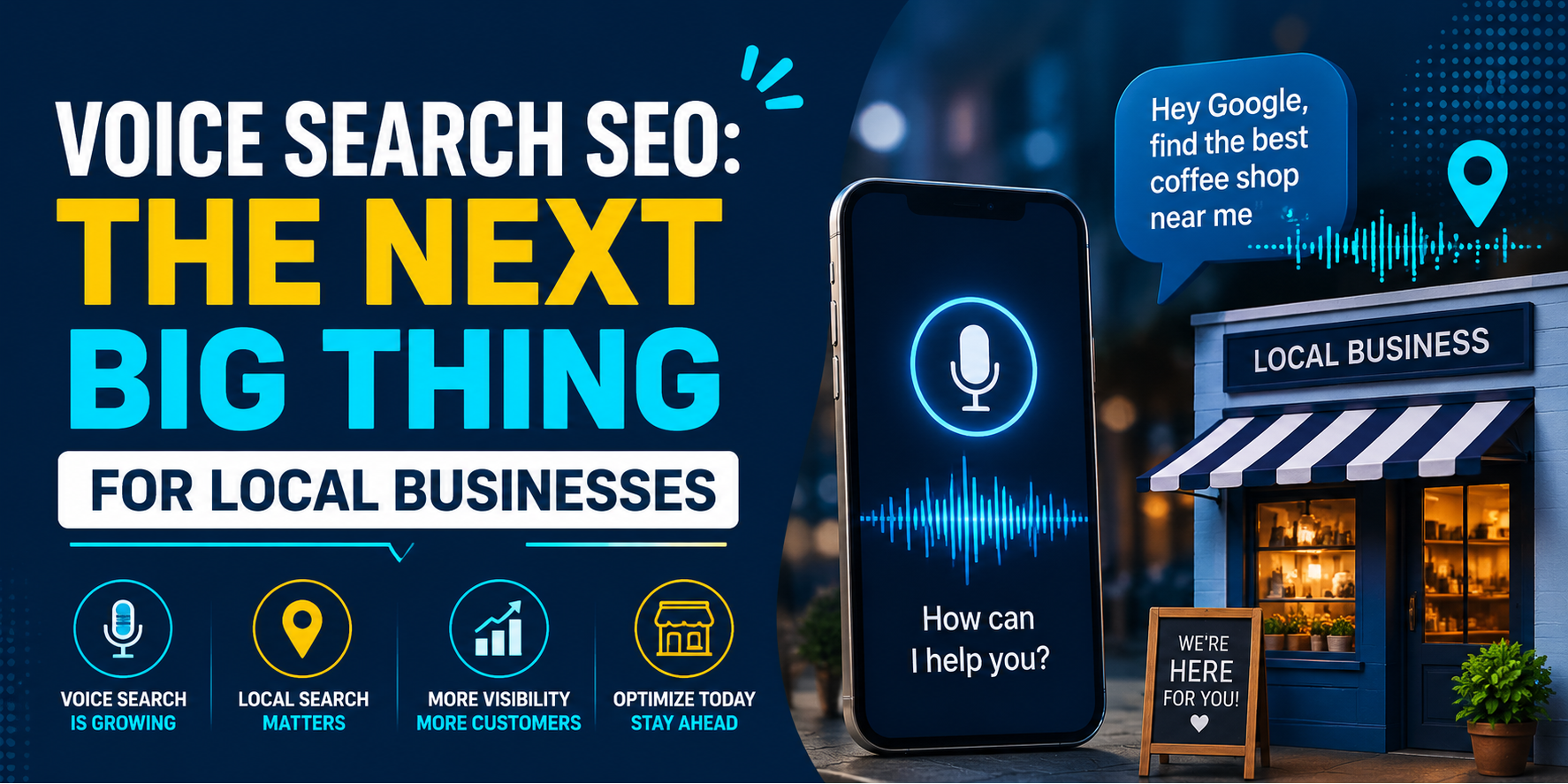
"Hey Siri, best CBSE school near me." "Alexa, find a homestay near Nandi Hills."
Sound familiar? Search behavior has quietly changed. People aren't typing short keywords into Google anymore — they're talking to their phones, in full sentences, while multitasking, commuting, or planning on the go. For local businesses, this shift isn't a passing trend. It's the next big opportunity in SEO, and the ones who catch it early will be the ones who get found first.
What Makes Voice Search Different?
Typed searches and voice searches don't behave the same way. Voice searches tend to be:
Longer and more natural — closer to how we actually speak.
Conversational — often phrased as full questions.
Location-specific — "near me" is doing a lot of heavy lifting.
Mobile-first — asked on the move, often needing an instant answer.
Instead of "Best CBSE School Bangalore," someone might now ask, "Which is the best CBSE school near KR Puram?" Instead of "Nandi Hills homestay," they're asking, "What's a good family stay near Nandi Hills?" The intent is the same — but the way of asking has changed, and businesses need to speak that same language.
Why Local Businesses Should Care:
For a business without a strong local voice-search presence, it's easy to miss out on customers who are ready to act right now — a parent choosing a school for admission, a traveler booking a weekend stay. Voice Search SEO helps businesses show up in exactly these real-time, high-intent moments, often ahead of competitors who are still relying purely on traditional keyword strategies.
What makes this especially valuable is timing. Someone asking a voice assistant for "the best school near me" or "a homestay near Nandi Hills" usually isn't casually browsing — they're close to making a decision. Businesses that appear in that moment have a real edge, simply by being easy to find when it matters most.
We're seeing this play out with two of our own clients.
Sristi Global School, for instance, wanted parents searching things like "schools with holistic education near me" or "schools with admissions open near me" to actually find them. Amarakosha, a getaway destination near Nandi Hills, wanted to reach travelers asking their voice assistants for the "best homestay near Nandi Hills" or a "luxury villa near Bangalore" while already driving toward the hills.
Your Technical SEO Checklist for 2026:
Winning at voice search starts with getting the technical basics right. Here's a simple Technical SEO Checklist for 2026 to help any local business get voice-search ready:
Optimize your Google Business Profile — This is often the first thing voice assistants pull from for local queries.
Build conversational FAQ pages — Answer the actual questions your customers are asking, in natural language.
Use location-based keywords — Mention nearby landmarks, neighborhoods, or reference points people naturally search around.
Add schema markup — Help search engines understand your content, not just read it.
Improve mobile site speed — Voice search results favor fast, mobile-friendly websites.
Applied well, this checklist helps schools connect with the right parents, and helps travel businesses appear in more Maps searches, drive more direct bookings, and capture more mobile traffic — all from customers who are already asking the right questions.
The Businesses That Win Tomorrow Start Today:
Voice search isn't a future trend to prepare for — it's already how people are searching, right now, in Bangalore and beyond. Businesses that optimize for natural, local, conversational search will be the ones who get chosen, simply because they were easiest to find.
As the Best Digital Marketing Agency in Bangalore, AimGlobal Digital helps businesses like schools, homestays, and local brands build exactly this kind of visibility — through smart local SEO, Google Business Profile optimization, FAQ content, and technical SEO that speaks the same language as your customers.
Want your business to be the answer, not the afterthought?
Book a free consultation with AimGlobal Digital, and let's get you found.